 Mark Stücklin
Spain’s housing market is tightening as the supply of homes for sale continues to shrink—pushing prices higher and leaving buyers with fewer options.
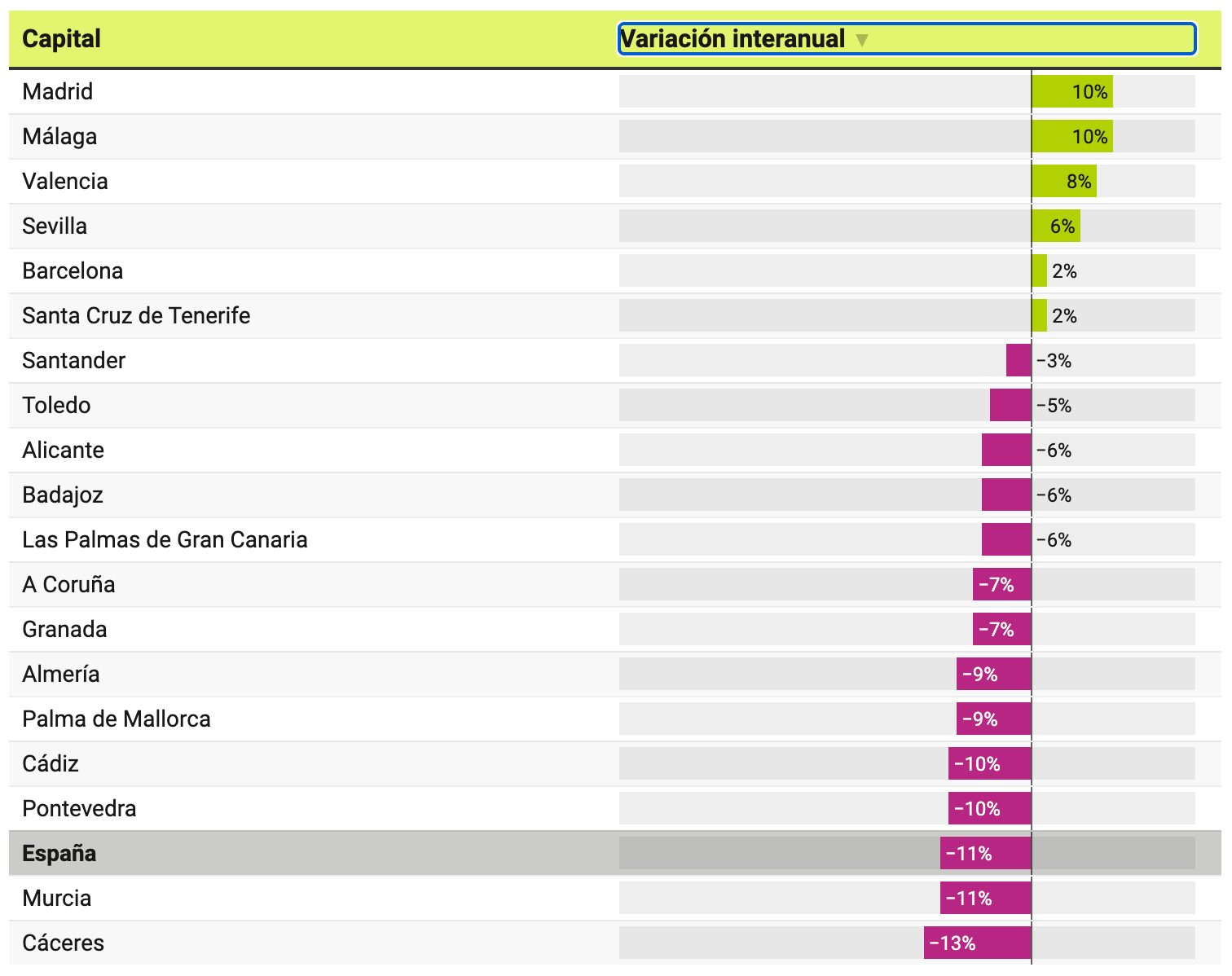
The number of homes for sale in Spain fell by 11% year-on-year in Q4 2025, according to data from Idealista, the country’s largest property portal and a useful proxy for overall market trends.
The decline was widespread, with most provincial capitals seeing fewer properties on the market than a year earlier. However, a handful of major cities bucked the trend. Supply rose in Madrid and Málaga (both +10%), followed by Valencia (+8%), Seville (+6%), and Barcelona and Santa Cruz de Tenerife (both +2%).
These are not just any markets—they are some of Spain’s most dynamic and internationally attractive destinations, including hotspots for foreign buyers such as Barcelona, Madrid, Málaga, Valencia, and Tenerife.
A tightening market, not a healthy one
At first glance, rising supply in major cities might suggest a turning point. But the bigger picture tells a different story. Nationally, and across most of Spain, supply continues to shrink—a classic sign of a tightening market where demand outstrips available stock.
This imbalance helps explain why prices have been rising so persistently. More buyers chasing fewer homes inevitably pushes values higher, particularly in desirable urban and coastal locations.
The underlying issue is structural: Spain is simply not building enough homes in the areas where demand is strongest. A combination of red tape, restrictive planning rules, environmental regulations, and rising development costs is limiting new supply. The result is a bottleneck that keeps pressure on both prices and availability.
Is a change in trend emerging?
According to Francisco Iñareta, spokesperson for Idealista, there are early signs that the market might be shifting—at least in the biggest cities.
He notes that “although national supply and that of most capitals continues to decline, the data from Q4 2025 could point to a change in trend in Spain’s main markets” .
One possible explanation is that high prices are beginning to price out part of the demand. As some buyers step back, the pressure on available stock eases slightly, allowing supply to stabilise or even grow in key markets.
However, Iñareta cautions that it is too early to confirm whether this is a lasting shift, or how it might affect prices going forward .
What it means for buyers and sellers
For now, the dominant trend remains clear: Spain’s housing market is tight, especially in high-demand areas. Limited supply continues to underpin price growth, even if there are early signs of cooling at the top end.
For sellers, this is broadly supportive—scarcity remains on their side, and they should be in the saddle when it comes to negotiations. For buyers, particularly foreign investors targeting prime locations, the message is equally clear: competition is still fierce, and choice remains limited.
Thinking of selling a property in Spain?
A successful sale starts before you put your property on the market — and before you even speak to estate agents or lawyers. The first step is to understand what you own, what your property is worth, what sort of market you are selling into, how the sales process works, who you can trust, and what strategy makes most sense for you.
Too often, owners enter the process without independent advice and end up being steered by agents or others whose priorities may not fully align with their own. SPI offers expert guidance designed to put your interests first, helping you get organised, make sense of the market, and prepare for sale with a clear plan and personalised strategy.
Get your sale off on the right foot and find out how to sell well.
