 Mark Stücklin
France is moving to make rent controls permanent, echoing policies already unfolding in Spain and the UK – and revealing how Europe’s housing shortage is being made worse by the very politicians who claim to be fixing it.
Rent controls are often presented as a necessary response to a housing “emergency”. But as a Le Figaro news story makes clear, this is not just a Spanish experiment gone wrong. France is now debating whether to make rent controls permanent and nationwide, while the UK continues down a parallel path of tighter regulation and higher costs for private landlords.
The pattern is depressingly familiar.
France moves to normalise rent control
According to Le Figaro, socialist MPs have tabled a proposal to end the experimental status of rent controls and extend them to all “stressed” housing areas across France. The policy, initially due to expire in 2026, caps rent increases and is presented as a way to protect tenants from “excessive” rents.
Supporters insist the policy works. Paris city officials claim it has saved tenants thousands of euros and argue that falling rental supply cannot be blamed on rent controls, pointing to similar declines in cities without caps.
But even within government there is unease. France’s housing minister has warned against ideological dogmatism, and Jean-François Copé, mayor of Meaux, was blunter still, describing rent control as “a left-wing thing” he would never implement.
What the critics are really saying
The reader comments under the Le Figaro article are revealing, not because they are polite or measured, but because they echo what landlords and investors have been saying for years across Europe.
Many point to the cumulative effect of regulation: rent caps combined with rising property taxes, tightening energy efficiency rules, and ever more tenant-friendly legislation. Individually, each measure can be defended. Together, they crush returns, increase risk, and push private capital out of the rental market.
Some commenters put it succinctly: the problem is not greed, but supply. When landlords sell, convert properties, or simply stop investing, fewer homes are available to rent. Prices then rise, not because landlords want them to, but because demand exceeds supply.
Spain and the UK: different politics, same logic
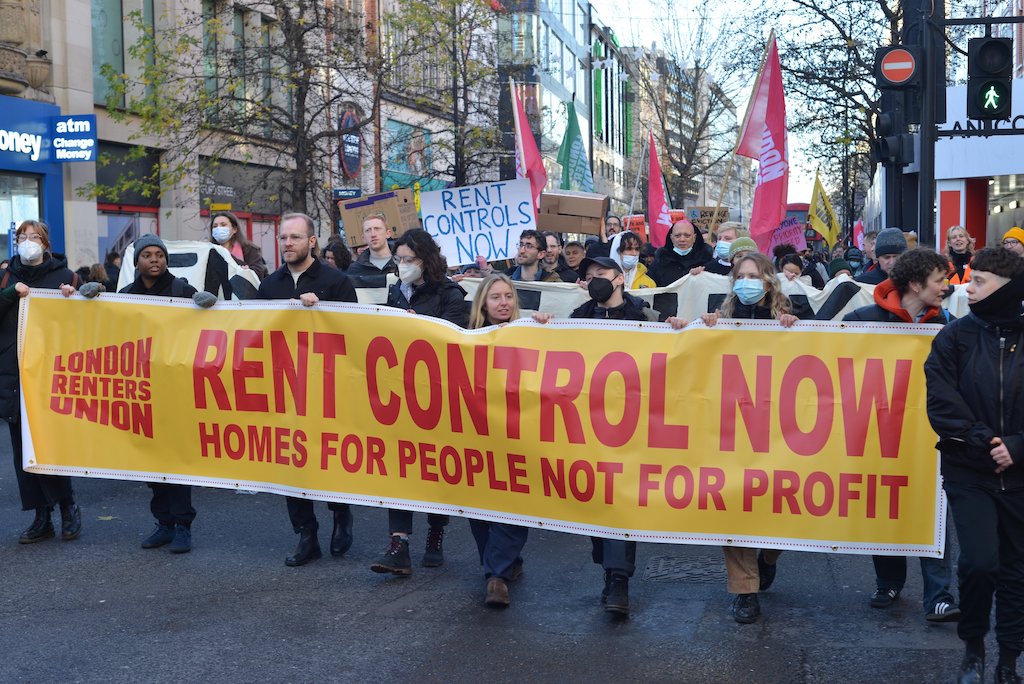
Spain’s rent control framework, introduced under the Housing Law, follows the same script. So does the UK’s steady tightening of landlord obligations and tax treatment. In all three countries, progressive politicians present landlords as speculators to be disciplined, rather than suppliers of housing responding to incentives.
As supply stagnates or shrinks, the same politicians then blame landlords for rising rents – a price signal telling them, loudly, that there are not enough homes.
The solution no one wants to admit
The uncomfortable truth is that rent controls do not fix housing shortages. They mask symptoms while making the underlying disease worse. Sitting tenants with good profiles may benefit in the short term, but newcomers, younger households, and marginal renters pay the price through scarcity and exclusion.
The only durable solution is a large increase in supply, driven primarily by private investment. That requires deregulation, lower costs, and a political climate that treats housing providers as part of the solution, not the enemy.
What is certain is that European states are neither willing nor financially able to fund a massive expansion of social housing themselves. Doubling down on controls while strangling private supply will only make matters worse – in France, Spain, the UK, and anywhere else tempted to repeat the same mistake.
