 Mark Stücklin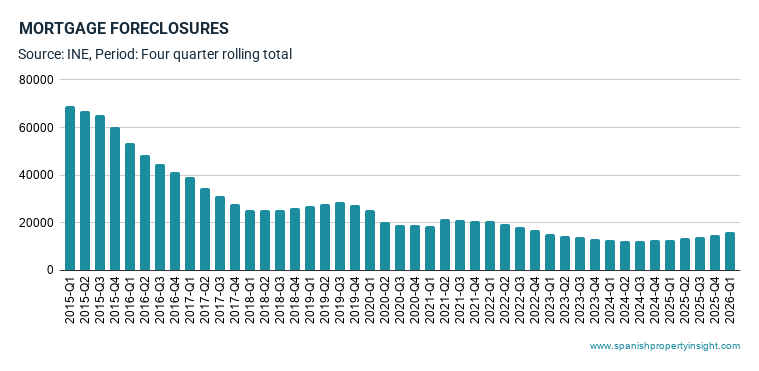
The latest foreclosure figures show financial stress is creeping higher, but Spain’s property market remains a long way from the kind of distress that creates widespread bargain opportunities.
One way to gauge financial distress in the Spanish property market is to look at mortgage foreclosures. When homeowners can no longer keep up with their mortgage payments, lenders eventually begin foreclosure proceedings. A rising number of foreclosures is usually a sign that financial stress is increasing.
The latest figures from the INE show exactly that. Mortgage foreclosures in the first quarter of 2026 reached 4,607 across Spain, up 34% compared to the same period last year.
At first glance, that looks like a worrying jump. But context matters.
The rolling four-quarter total, which smooths out seasonal fluctuations, has risen to 16,140. That’s the highest level since early 2023, but still far below the levels seen a decade ago. Back in 2014 the rolling annual total exceeded 70,000 foreclosures, before falling steadily as Spain recovered from the financial crisis.
In other words, distress is increasing from an exceptionally low base rather than signalling the start of a housing market meltdown.
Some regions have seen particularly sharp year-on-year increases. Mortgage foreclosures were up 70% in Madrid, 74% in Murcia and 50% in Andalusia. Catalonia, which consistently records one of the highest absolute numbers of foreclosures, saw a more modest increase of 14%. On the other hand, Aragón and the Balearics recorded declines.
What does this mean for buyers?
There is a persistent belief among some buyers that waiting for a wave of distressed sales will eventually deliver spectacular bargains. These figures suggest that day has not yet arrived.
Spain’s housing market is currently supported by relatively low unemployment, rising wages, population growth, strong foreign demand and a banking system that is much more conservative than it was before the financial crisis. While higher interest rates have undoubtedly put pressure on some households, they have not triggered widespread mortgage defaults.
That doesn’t mean bargains don’t exist. Individual owners still face divorce, inheritance disputes, ill health, relocation, business failures and other personal circumstances that force a sale. But those are isolated opportunities rather than evidence of widespread market distress.
For now, mortgage foreclosures suggest that financial stress in Spain is rising gradually, not exploding. That’s bad news for bargain hunters hoping to pick through the ruins of a collapsing market—but reassuring news for anyone who already owns property in Spain.
