 Mark Stücklin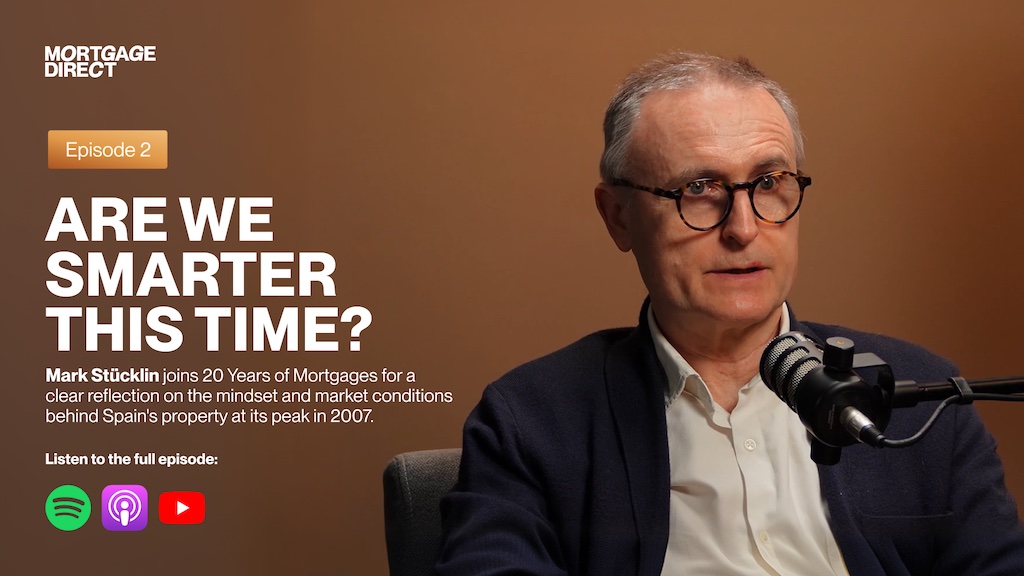
The Spanish property boom and crash remains one of the most extraordinary episodes in the country’s housing history. Nearly twenty years on, are there lessons that still matter today? I recently sat down with Katherine Walkerdine from Mortgage Direct to discuss exactly that.
I was invited by Mortgage Direct, one of Spain’s leading mortgage brokers for international buyers, to take part in the latest episode of their 20 Years of Mortgages podcast. The conversation looks back at the extraordinary property boom that culminated in the 2007 crash, why so many intelligent people got caught up in it, and whether today’s market shows any signs of history repeating itself.
The years leading up to the financial crisis were unlike anything Spain had seen before. House prices seemed to rise without interruption, cranes dominated the skyline, banks competed aggressively to lend, and many people came to believe that property prices only ever moved in one direction.
One point I make in the discussion is that market bubbles are rarely driven by reckless people making obviously foolish decisions. They happen because risk gradually comes to feel normal.
As I put it during the interview:
“Markets don’t collapse because everyone is reckless. They collapse because risk feels normal until it isn’t.”
Easy credit was a huge part of the story. Lending standards became so relaxed that some buyers borrowed more than the value of the property itself. The assumption that prices would continue rising encouraged more borrowing, which pushed prices even higher, creating a classic feedback loop that eventually ended badly.
Fortunately, today’s market is built on very different foundations. Mortgage lending is much more tightly regulated, banks are considerably more cautious, and the speculative overbuilding that characterised the pre-2007 years has largely been replaced by a housing shortage in many parts of Spain.
That doesn’t mean prices can’t fall, or that buying property is risk-free. It simply means today’s risks are different. The biggest lesson from the last cycle is not to assume that favourable conditions will last forever. Buy within your means, understand the risks, and make sure your plans still work if circumstances change.
If you’re interested in how Spain’s biggest property bubble developed, why it burst, and what it can teach buyers today, I think you’ll enjoy this conversation.
Many thanks to Katherine and the team at Mortgage Direct for inviting me onto the podcast. I enjoyed looking back at one of the most fascinating periods in the history of the Spanish property market—and discussing what today’s buyers can learn from it.
You can also read Mortgage Direct’s accompanying article based on the interview if you’d like a written summary of the discussion here.
