Mortgage foreclosures are rising in Spain, pointing to increasing financial stress among some homeowners. But the numbers are still nowhere near the levels seen after the property crash that began in 2008.
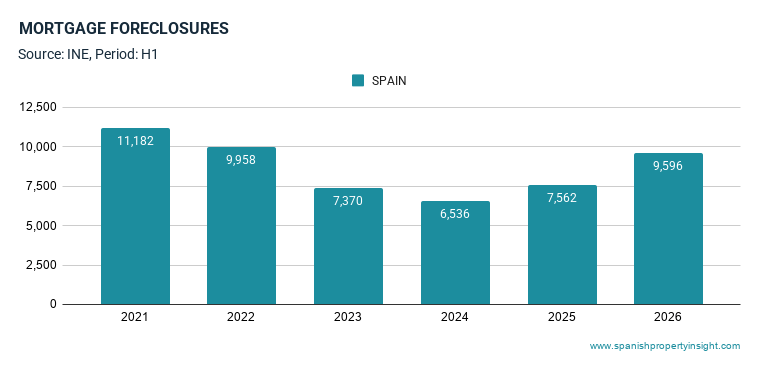
Spain recorded 9,596 mortgage foreclosures on homes in the first half of 2026, up 27% year-on-year and the highest H1 figure since 2022.
The increase varies significantly by region. Foreclosures rose 58% in Madrid, 41% in Murcia, 35% in Andalusia, 29% in the Canaries and 23% in Catalonia. The Valencian region was up just 5%, whilst the Balearics fell 6%.
The national trend is clear. H1 foreclosures fell from 11,182 in 2021 to 6,536 in 2024, before rising to 7,562 in 2025 and 9,596 this year.
Is Euribor part of the problem?
Euribor has been rising again, increasing pressure on borrowers with variable-rate mortgages. However, the sharpest recent increase came after the first half of the year, so it cannot explain the H1 rise in foreclosures by itself.
Higher borrowing costs may nevertheless add to the pressure in coming months, particularly for households with older variable-rate loans.
Still no crisis
For buyers hoping rising distress will produce a wave of repossessions and bargain properties, the numbers need perspective.
Foreclosure levels after the 2008 crash were on a completely different scale. Today’s figures are still insignificant by comparison.
So distress is clearly rising and worth watching, but this is not yet a market of forced sales and fire-sale bargains.
